You just got a high reading — here is what that actually means
Most people who call us are not researching radon for fun. They got a number back — maybe from a kit Linn County sold them, maybe from a buyer’s inspector, maybe from a test they finally ran after years of putting it off — and that number is sitting at or above 4.0 picocuries per liter (pCi/L). Suddenly the basement playroom, the guest suite, or the home they are about to buy feels different.
That reaction is reasonable. The U.S. Environmental Protection Agency treats 4.0 pCi/L as the action level: fix the home. Linn County Public Health uses the same threshold in its local guidance and points residents toward Iowa’s list of certified mitigators when follow-up confirms elevated levels. Radon is the second leading cause of lung cancer overall and the leading cause among non-smokers. You do not need to panic, but you do need a plan.
Cedar Rapids sits in Linn County, which the EPA Map of Radon Zones classifies as Zone 1 — the highest potential category, where predicted average indoor screening levels exceed 4.0 pCi/L. That map does not predict your exact house. Plenty of Zone 1 homes test low, and homes in lower zones can still test high. What Zone 1 does tell you is that elevated results are common enough in this geology that “we’ll worry about it later” is a weak strategy — especially in winter, when Iowa homes run closed-house conditions for months.
Why radon is a Cedar Rapids / Linn County problem
Iowa stands out nationally. Iowa HHS and related public-health summaries report that roughly 71% of Iowa homes in survey data measured at or above 4.0 pCi/L — among the highest percentages in the United States. The state’s average indoor radon concentration has been reported far above the U.S. average. All of Iowa is Zone 1 on the EPA map.
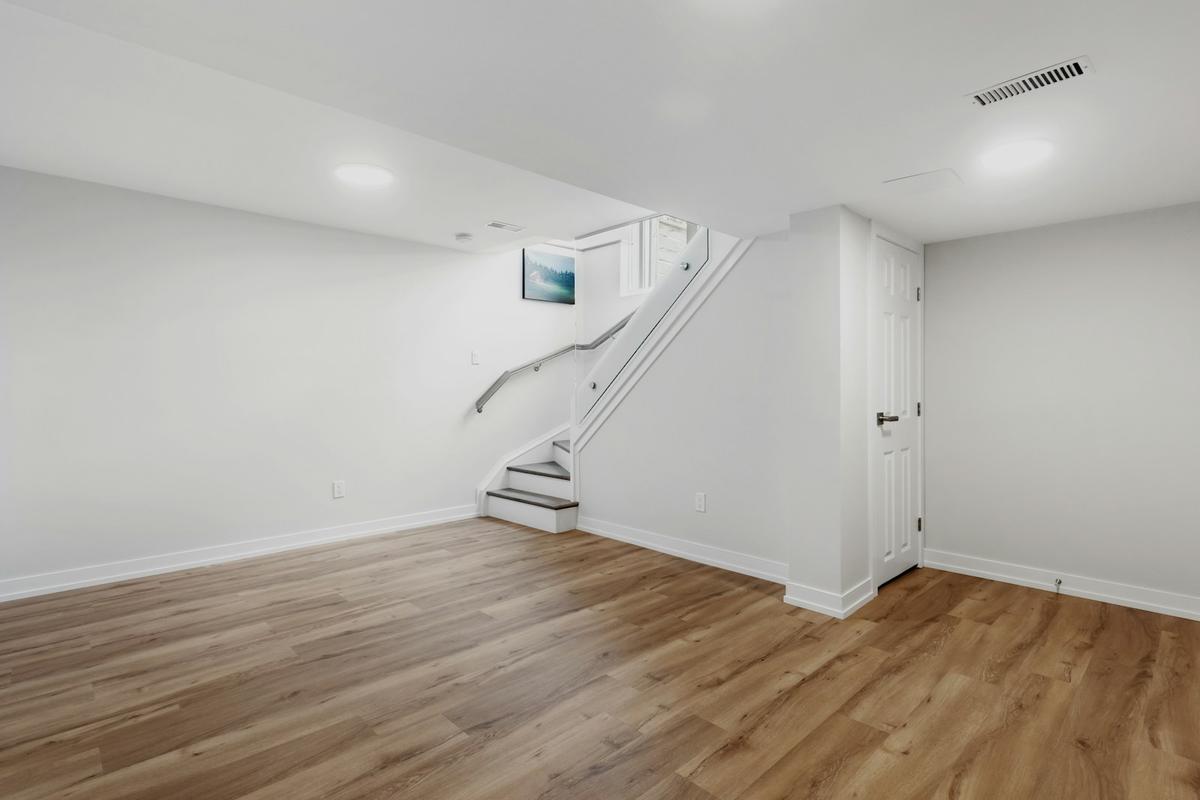
Local housing patterns amplify the risk pathway. Many Cedar Rapids and Linn County homes have basements used as living space. Soil gas can enter through floor cracks, the slab–wall joint, porous concrete block, floor drains, and sump pits. When outdoor air is cold and windows stay shut, stack effect and reduced ventilation can keep more of that soil gas indoors. A short-term winter test under closed-house conditions is often when people first see a high result.
Linn County Public Health sells short-term and long-term kits from its office at 1020 6th St. SE in Cedar Rapids (phone 319-892-6000). That program exists because local agencies treat radon as a real exposure, not a rare curiosity. Kits are a starting point. Mitigation is what lowers the level after confirmation.
Local context, not scare tactics: Zone 1 status and high statewide percentages explain why so many Cedar Rapids homeowners eventually need a system. They do not mean every home fails. Test first. Mitigate when results support it.
What happens when DIY “fixes” fall short
After a high reading, it is tempting to seal every crack with caulk, run a dehumidifier, open windows when the weather allows, or buy a cheap fan and hope for the best. Sealing large openings is often part of a professional design — but sealing alone rarely brings a Zone 1 basement from high teens down below 4.0 for the long term. Weather changes. Soil moisture changes. A sump that was “fine” last fall still communicates with soil gas.
Unlicensed handyman piping, bathroom-exhaust fans pressed into service as “radon fans,” or systems that discharge where exhaust can re-enter the house create new problems: poor pressure field, frozen condensate in winter, noisy installs, and results that do not hold on retest. Iowa law is clear that paid mitigation requires an Iowa HHS–credentialed radon mitigation specialist. That rule exists so systems meet recognized standards (including EPA/ASTM mitigation practices as adopted in Iowa rules), not so paperwork can collect dust.
How professional radon mitigation works
The most common approach for basement and slab homes is active soil depressurization (often called sub-slab depressurization). A credentialed specialist:
- Reviews your test results and inspects the foundation, sump, slab, and likely soil-gas paths.
- Creates a suction point (or points) under the slab or under a sealed crawlspace membrane.
- Runs PVC piping from that suction field to a continuous radon fan.
- Discharges the exhaust outdoors above the roof line (or per code-compliant discharge rules) so gas does not re-enter.
- Seals major openings that would short-circuit the pressure field.
- Documents the system and recommends a post-mitigation retest.
On crawlspaces, the same idea often pairs a sealed vapor barrier with suction under the membrane. Mixed foundations (part basement, part crawlspace, part slab) need a design that treats each section — this is where experience matters more than a one-size kit.
When the system is sized and sealed correctly, most homes see substantial reductions. The goal is typically to get below 4.0 pCi/L; many systems achieve lower. Exact results depend on soil permeability, foundation complexity, and how tightly living space communicates with soil.
Our process for Cedar Rapids homeowners
1
Confirm the need
We review your short-term or follow-up results. If you only have a single borderline reading, we may recommend confirming with another test before you invest in a system — especially outside a hard closing deadline.
2
Design for your foundation
An Iowa-credentialed mitigator evaluates slab, block, sump, and crawlspace conditions and proposes suction points and routing that fit your house — not a generic diagram.
3
Install and verify
Install day focuses on durable piping, proper fan location, sealed penetrations, and discharge. Then you retest so you know the system is doing its job.
If you are buying or selling, timeline is part of the design conversation. Iowa does not force mitigation as a condition of closing, but contracts often do once a buyer’s test comes back high. See our radon inspection page for disclosure and contingency context, and radon testing for how short-term tests fit real-estate windows.
Who this service is for
Homeowners already living with elevated levels
You tested because a neighbor mentioned it, because Linn County kits were easy to pick up, or because someone in the family is especially cautious about indoor air. If follow-up confirms 4.0 or higher — or you are consistently in the 2–4 range and use the basement daily — mitigation is the durable answer.
Buyers and sellers under a clock
Iowa sellers must disclose known radon tests and provide the Iowa Radon Home-Buyers and Sellers Fact Sheet; buyers acknowledge receipt. Testing and mitigation are not state-mandated to close, but they are common negotiation points. A clean post-mitigation retest can keep a deal moving.
Homes with finished basements or winter-tight envelopes
Finished lower levels increase time spent in the highest-concentration zone of many houses. Energy-efficient sealing that keeps heat in can also keep soil gas in unless a mitigation path exists.
What we do not claim
We do not claim to be the “#1” company in Cedar Rapids. We do not invent awards, review counts, or licenses you cannot verify. Iowa maintains credentialing for radon measurement and mitigation; ask for the technician’s Iowa credentials. All work arranged through Cedar Rapids Radon Solutions is performed by Iowa-licensed professionals. This site is a local service brand that connects homeowners with those technicians.
Winter note for Iowa: Closed-house testing in cold months often produces higher short-term readings than summer. That does not make winter results “fake” — it reflects how people actually live here for a large part of the year. Design the system for real conditions, then retest.
Related services
Frequently asked questions
What radon level means I need mitigation in Cedar Rapids?
The U.S. EPA recommends fixing your home if radon measures 4.0 pCi/L or higher. Linn County Public Health guidance aligns with that action level. Many homeowners also consider mitigation between 2 and 4 pCi/L, especially if a finished basement is used daily.
Does Iowa require a licensed radon mitigator?
Yes. Under Iowa Code chapter 136B and Iowa Administrative Code 641 Chapter 44, paid radon mitigation in Iowa must be performed by a person credentialed by Iowa HHS as a radon mitigation specialist. Homeowners may work on their own property without pay, but professional systems should be installed by credentialed technicians.
How long does radon mitigation take?
Most residential active soil depressurization installs for slab or basement homes are completed in a day once materials and design are set. Crawlspace or complex multi-foundation homes can take longer. A post-mitigation retest is typically scheduled after the system has run for the recommended period.
Will mitigation work in an older Cedar Rapids basement?
Yes. Older foundations with cracks, sump pits, and porous block walls are common entry paths. Credentialed mitigators design around those features — often sealing major openings and installing a fan-powered pipe system that depressurizes soil under the slab or membrane.
Do I need mitigation before closing on a home in Iowa?
Iowa does not require testing or mitigation to close a sale, but sellers must disclose known radon tests and provide the Iowa Radon Home-Buyers and Sellers Fact Sheet. Buyers often test during the inspection period and negotiate mitigation or credits if results are elevated.
Ready for a mitigation quote? Call (319) 403-2604 or use the form at the top of this page. Soft next step: we confirm scope and connect you with an Iowa-licensed technician who can design the system for your foundation.